Rare Lake Sturgeon Made 681-Mile Swim
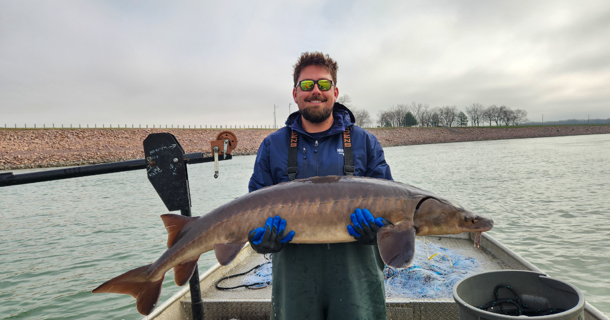
Fisheries biologists for the Nebraska Game and Parks Commission were collecting paddlefish for a study this spring when a large and rare fish for Nebraska showed up in the net.
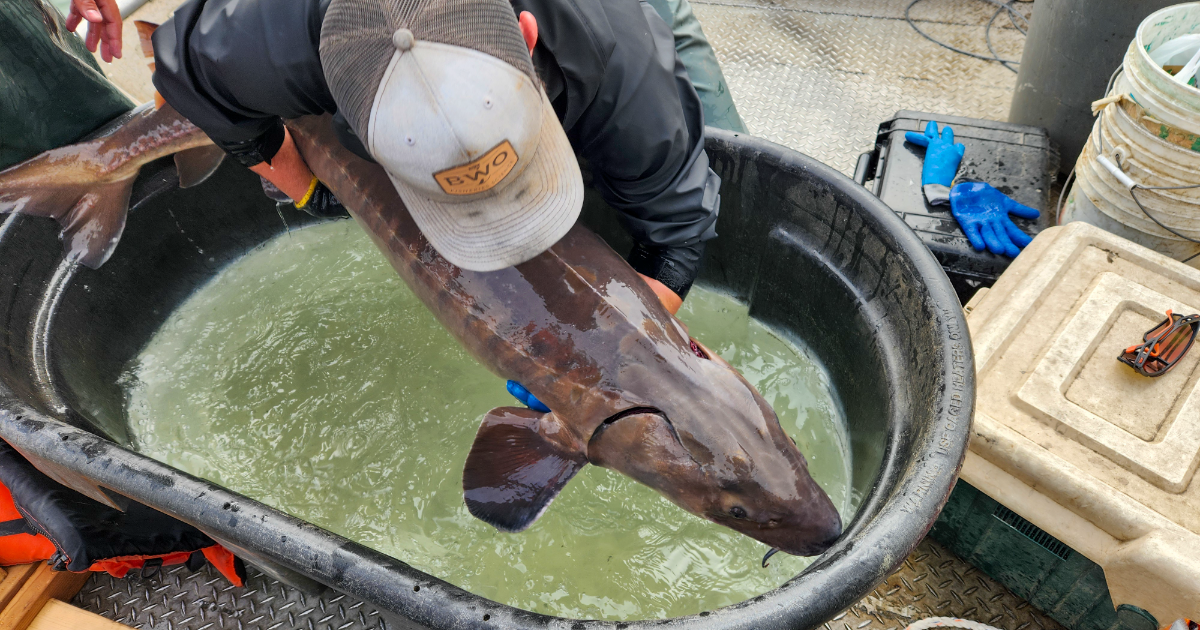
A 70-pound lake sturgeon was pulled from the Missouri River at Gavins Point Dam on April 14.
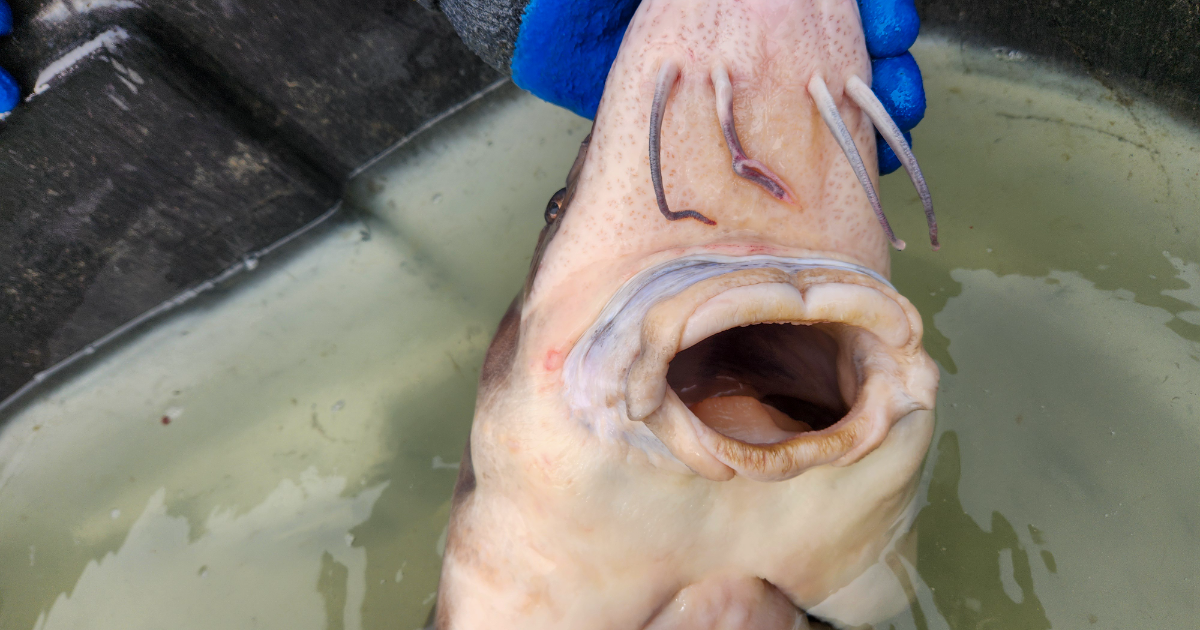
Blake Logan and his fellow Missouri River Program biologists pulled in the net with the fish, which is listed as threatened in Nebraska. They photographed it, weighed it, and measured it at 59.6 inches in length.
“Our sampling crews in the Missouri River Program handle thousands of fish each year from March through November but rarely see lake sturgeon,” Logan said. “I would say we catch one individual every other year.”
Before this sturgeon was released, it was found to have been fitted with a PIT (Passive Integrated Transponder) tag, a small, cylindrical tag used to identify and track individual animals.
Biologists with the Missouri Department of Conservation had captured and tagged the fish at the Missouri River's confluence with the Osage River in 2017. At that time, the sturgeon measured 47 inches in length and weighed 29 pounds.
From where it was captured in the Osage River, to where it was netted at Gavins Point Dam, the fish would have swam 681 miles upstream.
In addition to studying paddlefish, the Missouri River Program samples other species, including sturgeon.
“We’ve been extensively sampling for sturgeon species since 2002, when we started as a partner under the U.S. Army Corps of Engineers’ funded sturgeon monitoring projects,” Missouri River Program Manager Kirk Steffensen said.
“Lake sturgeon have always been a rare capture in Nebraska, and the few we’ve sampled were never the size that Blake sampled,” he said. “We capture far fewer lake sturgeon compared to pallid sturgeon, and shovelnose sturgeon are by far the most common.”
As a species, sturgeon have been around for more than 150 million years and existed during the Jurassic Era, when dinosaurs roamed the earth. These fish are considered living fossils, having changed little from their ancestors.
Lake sturgeon were reportedly more common in the Missouri River before the 1900s but were nearly or completely extirpated due to overharvesting, Logan said.
In Missouri, where the lake sturgeon is listed as endangered, the MDC has been working for several decades to reintroduce fish to the Mississippi and Missouri river systems through hatchery spawning and stocking. It also has documented natural spawning but is unsure if the young are surviving.
“Presumably, all lake sturgeon in Nebraska are progeny of the Missouri Department of Conservation's lake sturgeon recovery program,” Logan said.
They grow to be much larger in other areas of the country, too. For example, the Wisconsin Department of Natural Resources in 2012 tagged and released a 240-pound lake sturgeon that measured 87.5 inches.
Lake sturgeon often live to be 30-50 years old, with some individuals approaching 100 years. Logan estimated the fish the crew netted was at least 20 years old.
In Nebraska, the lake sturgeon and the endangered pallid sturgeon are illegal to harvest and possess. If caught by an angler, they should be immediately released into the water unharmed. The only sturgeon that is legal to harvest in the state is the shovelnose. See a sturgeon identification guide on page 29 of the 2026 Fishing Guide.